What Is Solar Interconnection?
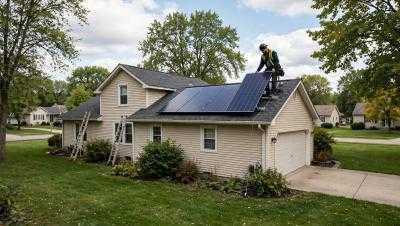
The panels are on the roof. The inverter is wired in. The installer has packed up. And the system stays switched off for another six weeks.
That gap is almost always interconnection. Interconnection standards are the rules for getting permission to connect a solar system to the grid at all — and they are a completely separate question from what you get paid for the power it makes.
Two different questions
These get run together constantly, so it is worth separating them clearly. Net metering decides the value of the electricity you export. Interconnection decides whether you may connect the equipment, and on what technical and legal conditions.
A state can have generous net metering and slow, costly interconnection, or the reverse. Both have to work before a project makes sense, and only one of them tends to get discussed in a sales conversation.
Why utilities care so much
The grid was designed to push electricity one way: from a power station, out along the lines, into buildings. A rooftop array reverses that locally, and a utility has to be confident that thousands of small generators will not make the network unsafe or unstable. For a sense of what is on the other side of your meter, The Grid Link is a good primer.
The sharpest concern is what happens during a power cut. If your panels kept feeding the grid after an outage, they could energise a line that a repair crew believes is dead. Every modern standard therefore requires anti-islanding: the system must detect that the grid has gone and shut itself down within a fraction of a second. It is also why a grid-tied array without a battery goes dark in a blackout along with everything else, which surprises a lot of new owners.
How the process runs
The detail differs by state and by utility, but the sequence rarely does. An application goes in before work starts, normally filed by the installer, with the system design and equipment specifications. The utility then reviews it at a level scaled to the size of the system — most standards define tiers, so a small residential array gets a fast-track screening while a larger system faces a full engineering study that the applicant pays for.
After that comes an interconnection agreement, which is a contract covering safety and liability and may require insurance or an externally accessible disconnect switch. Then inspection, usually by the local electrical authority and sometimes with a separate witness test by the utility. Finally permission to operate: the written authorisation to energise the system. Switching on before that arrives can void the agreement, so the wait at the end is not optional.
Equipment does most of the work
Review goes far more smoothly with certified hardware. Inverters are generally expected to meet UL 1741, and system behaviour during grid faults is governed by IEEE 1547. A listed inverter clears screening routinely; something unusual invites scrutiny and delay. Since the inverter is the component doing the grid-facing work, Understanding solar inverters is worth reading alongside this.
What actually varies
The thresholds are where the real differences sit. Where the fast track ends determines whether a project waits weeks or many months. Study costs and deposits land on the applicant once a system leaves that fast track. Some states impose deadlines on the utility to respond; others leave it open-ended.
Coverage varies as well. A state standard commonly binds only the large investor-owned utilities, leaving municipal utilities and rural electric co-operatives to set their own procedures. Most states do publish a standard — California's is a representative example — and larger projects that connect at transmission level or sell into wholesale markets fall instead under federal interconnection procedures for small generators. A few states have no statewide rule, which leaves it to each utility.
What this means in practice
You will almost certainly never file an interconnection application yourself; a competent installer handles it and knows the local utility's quirks. That is one of the better reasons to weigh experience over price when choosing one, which Hiring a PV Pro goes into.
What is worth doing is asking two questions before you sign: how long interconnection currently takes with your utility, and who pays if a study is required. Both answers are knowable in advance, and neither tends to be volunteered.