10 States Now Let You Plug In Solar: What the New Laws Allow, When They Start, and the Wattage Limits
Ten states now let you plug in solar — no rooftop installation, no contractor, no utility interconnection agreement. Utah started it in 2025. Nine more states followed in 2026, with California — the largest electricity market in the country — becoming the tenth when Governor Newsom signed its law on September 30, 2026.
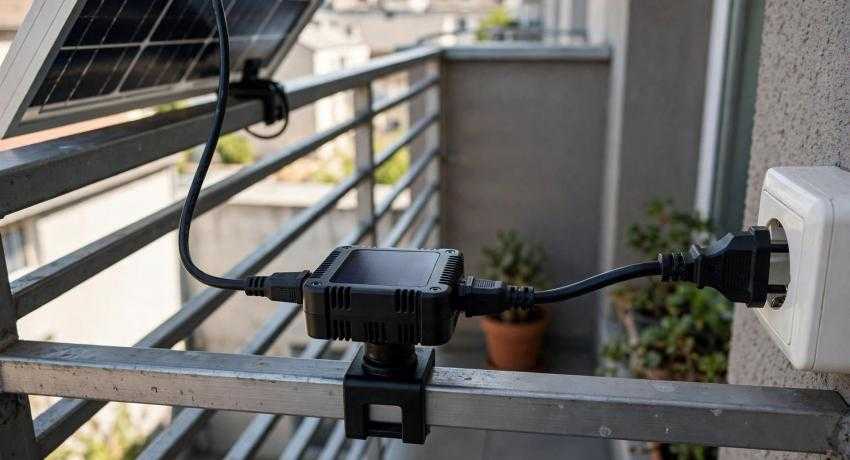
These laws share a pattern: a small, certified kit that plugs into a standard 120V outlet, up to a wattage cap, with no utility approval or interconnection fee. But the details vary by state — wattage caps, effective dates, tenant rules, and landlord protections are not the same everywhere. If you are thinking about buying a kit, check your state's law first.
For what these kits are and how they work, see our balcony solar explainer.
What the new laws allow
In states with plug-in solar laws, a qualifying system is generally:
- Small: most states cap output at 1,200 watts. Colorado allows up to 1,920 watts, the highest cap in the country.
- Certified: kits must meet the National Electrical Code and be certified by UL or an equivalent nationally recognized testing laboratory, with anti-islanding protection that shuts the system off if the grid goes down.
- Plug-in: connects through a standard 120V outlet and is intended primarily to offset your own electricity use, not to sell power back to the grid.
- Exempt from interconnection: no utility interconnection agreement, no utility approval, and no interconnection fee for qualifying systems.
What these laws do not do: they do not enroll you in net metering, they do not pay you for exported power, and they do not power your home during a blackout — anti-islanding shuts the system off during an outage to protect line workers. Excess power that flows to the grid generally earns nothing, which is why sizing below your baseline load matters.
State by state
| State | Bill | Cap | Key dates and rules |
|---|---|---|---|
| Utah | HB 340 | 1,200W | First state. Signed March 25, 2025; effective May 7, 2025. No utility approval, fee, or interconnection agreement. |
| Maine | LD 1730 | 1,200W (tiers) | Signed April 6, 2026; effective July 15, 2026. Tiers: up to 420W DIY; above 420W to 1,200W needs a licensed electrician. |
| Virginia | HB 395 (Ch. 1052) | 1,200W | Signed April 22, 2026; first provisions effective January 1, 2027 per enrolled text. Tenant 7-day notice. Landlords of 5+ units may not prohibit, with reasonable restrictions allowed. |
| Colorado | HB26-1007 | 1,920W | Signed May 7, 2026; act effective Aug. 12, 2026. On and after Jan. 1, 2027: no one may unreasonably prohibit installation/use/operation, such covenants/restrictions are void, devices count as an energy-efficiency measure, and >391W devices may not be sold/leased/rented unless UL labeled and listed. Cap 1,920W. |
| Maryland | HB 1532 (Ch. 353) | 1,200W | Signed May 12, 2026; plug-in provisions effective July 1, 2026. Notify utility BEFORE installation and certify safety and capacity. No utility approval or fee. Maryland law is silent on landlords/HOAs — renters and HOA members must still get permission. |
| Connecticut | HB 5340 (Public Act 26-127) | 1,200W | Signed June 4, 2026; plug-in provisions effective October 1, 2026. No fees or interconnection agreement. |
| New Hampshire | SB 540 (Ch. 262) | 1,200W | Signed July 2, 2026. Plug-in provisions take effect Jan. 1, 2027; the building-code section (Sec. 3) takes effect only when the Dept. of Energy commissioner certifies a nationally recognized standard exists. One system per metered customer, max 1,200W AC, no utility approval / interconnection review / fee. |
| Vermont | S.202 (Act 149) | 1,200W per meter | Signed June 16, 2026; effective July 1, 2026. Tenant must give 10 days written notice; landlord may impose reasonable restrictions within 10 days. |
| New Jersey | S2368/A4836 | 1,200W | Signed September 1, 2026; effective March 1, 2027. No utility approval, fees, or notification. Landlord, HOA, and municipal blanket bans barred, subject to placement, documentation, notice, and liability conditions. |
| California | SB 868 | 1,200W per dwelling | Signed September 30, 2026; effective January 1, 2027. No utility approval or fees; utility may require a simple online registration (not approval). Interconnection exemption sunsets January 1, 2030 unless lawmakers extend it. |
Two states to not count: New York and Massachusetts have passed bills in at least one chamber or are awaiting governor action, but neither is enacted as of October 2026. Do not treat them as legal plug-in solar states yet.
Why certified kits matter
Even where the law is in effect, you cannot plug in just any panel. Qualifying kits must be UL-certified (or certified by an equivalent lab) and meet the National Electrical Code, with anti-islanding protection. In California, no kit on the market yet met every requirement in the bill at signing, with compliant products expected by spring 2027. In Colorado, approved units were not widely available as of May 2026. Buying an uncertified imported kit gets you none of the law's protections.
To find your utility's rules, see SolarUSA's electric utilities directory.

Checklist before you plug in
- Confirm your state's plug-in solar law, wattage cap, and effective date — especially in New Hampshire and Colorado, where effective-date provisions should be checked in the enrolled text.
- Buy only a UL-certified kit rated for your state's limit.
- Notify your utility if your state requires it (Maryland: before installation; Vermont: tenant 10-day notice; Virginia: tenant 7-day notice).
- Get landlord or HOA permission in writing where required — especially in Maryland, where the law grants no tenant/HOA protection, and in any building with balcony-mount rules.
- Check that your balcony railing or mount can safely hold the panels in wind.
- To compare a plug-in kit with a full rooftop system for your home, get a solar quote.
Bottom line: Ten states now let you plug in solar without utility approval or interconnection fees — Utah first, California tenth. The pattern is consistent, but the caps, dates, and tenant rules are not. Check your state's enrolled law, buy certified equipment only, and get landlord or HOA permission where your state requires it.
This is general information, not legal or electrical advice. Verify your state's current plug-in solar law, your utility's rules, and your building's requirements before you buy or plug in.
Sources: Utah enrolled HB 340 (le.utah.gov); Virginia enrolled HB 395, Chapter 1052 (Virginia LIS); Maryland PSC Balcony Solar page (psc.maryland.gov); New Hampshire General Court Chapter 262 (SB 540-FN); Colorado General Assembly HB26-1007; Canary Media; pv-magazine USA; Solar.com; National Geographic, October 7, 2026.