Balcony Solar Panels: What They Are, How They Work, and Who They're For
Balcony solar panels — also called plug-in solar or balcony power plants — are small, self-contained solar kits that plug into a standard household outlet. Instead of a full rooftop installation with permits, installers, and a large upfront cost, you mount one to three lightweight panels on a balcony railing, patio fence, or ground mount, connect a microinverter, and plug in.
They will not replace a rooftop system or eliminate your electric bill. For renters, apartment dwellers, and homeowners who cannot install rooftop solar, they are one of the few solar options that exist at all. Germany alone has more than 1 million balcony systems installed, and a growing number of U.S. states have started clearing the legal path for them.
What is in a balcony solar kit?
A typical kit has only a few parts:
- Solar panels — usually one to three lightweight panels, each roughly 200–400 watts.
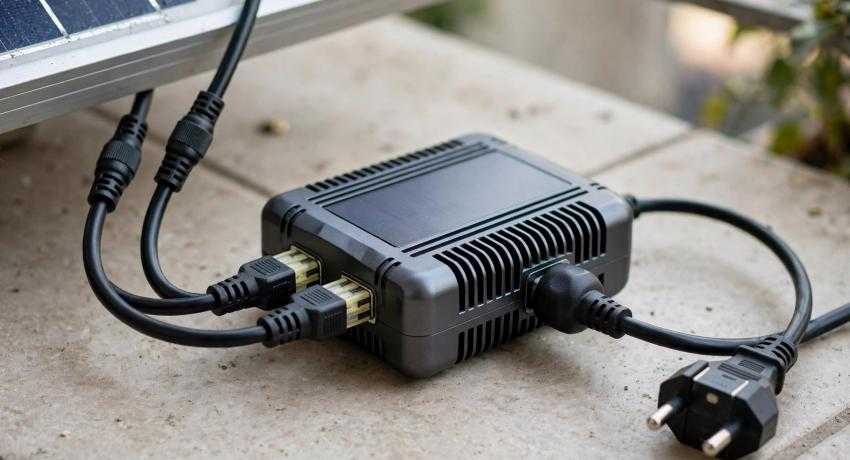
- A microinverter — converts the panels' DC output to AC, the type your home uses, and plugs into a standard 120V outlet in the U.S.
- Cables and a mount — a DC cable from the panels to the microinverter, an AC cord from the microinverter to the outlet, and a railing, wall, ground, or flat-roof mount.
Once plugged in, the electricity flows into your home's circuits. Appliances running on the same circuit use that solar power before drawing from the grid. Because output is small — most plug-in systems are 400 to 800 watts — most or all of the energy is used on-site, with little or nothing fed back to the grid.
How much power and savings can you expect?
Set expectations by size. An 800-watt system in a sunny spot might produce roughly 70 to 110 kilowatt-hours (kWh) per month, depending on location, orientation, tilt, and shading. For a 1,200-square-foot apartment using around 600 kWh per month, that is roughly 12% to 18% of monthly usage.
In dollars, that typically works out to roughly $13 to $50 per month in savings, depending on your electricity rate and how much solar you use during daylight hours. Balcony solar is best at covering your home's always-on baseline — refrigerator, Wi-Fi router, standby electronics — not at running air conditioning or an electric water heater.
Payback depends on kit cost, sunlight, and rates. Entry-level kits can cost a few hundred dollars. At $13 to $50 per month in savings, payback is typically measured in years, not months. Treat any claim of instant payback or a fixed annual payout with skepticism.
How is this different from rooftop solar?
- Size: A balcony kit is 400 to 800 watts. A typical residential rooftop system is several kilowatts — roughly five to ten times larger.
- Installation: Balcony kits are designed for self-installation with no roof work, no scaffolding, and no contractor. Rooftop solar requires a contractor, permits, inspections, and interconnection.
- Ownership: Balcony kits are portable. You can take them when you move. Rooftop solar stays with the house.
- Bill impact: Rooftop solar can zero out a bill with net metering. Balcony solar trims the bill and covers baseline loads.
Balcony solar is not a substitute for rooftop solar if you own a suitable roof and want maximum savings. It is an entry point for people who have been locked out of rooftop solar entirely.
Is balcony solar safe?
Safety is the most common concern — specifically, whether it is safe to connect a power source to a wall outlet. In early 2026, UL Solutions introduced UL 3700, a dedicated safety standard for plug-in solar. Certified equipment is built with protections such as:
- Automatic shut-off: If the cord is unplugged while the sun is shining, the exposed prongs de-energize almost instantly, so there is no shock risk.
- Anti-islanding / outage protection: If the grid goes down, the system automatically stops sending power, protecting utility workers and your equipment.
When you shop, look for equipment that carries UL 3700 listing, and confirm the specific certification your state or utility requires. Do not buy an imported kit that lacks U.S. certification and assume it is approved for normal use.
Is balcony solar legal where you live?
It depends on your state, your utility, and your building. A growing number of states have passed plug-in solar laws starting with Utah in 2025, with more states following in 2026 — we will cover those new state laws in a separate news post this Friday. In states with those laws, certified kits up to the state's wattage limit can plug in without the usual utility interconnection agreement or fee.
In states without a plug-in solar law, you may still need utility approval or an interconnection agreement, even for a small kit. Your building or HOA may also have rules about balcony mounts, and renters should get landlord permission before mounting anything. Before you buy, check three things:
- Your state's current plug-in solar law, if any, and its wattage limit.
- Your utility's interconnection or plug-in solar rules — see SolarUSA's electric utilities directory to find your utility.
- Your lease, HOA, or building rules for balcony mounts.
Do not assume that because a kit plugs in, it is automatically legal everywhere. The legal picture is changing fast, and it varies by state.
Who is balcony solar for?
- Renters who want to cut electricity costs without a permanent installation.
- Apartment owners in buildings where rooftop solar is not an option.
- Homeowners who want a low-cost trial before committing to a full rooftop system.
- Homeowners with limited roof space who want to supplement an existing system.
It is a poor fit if you need to power a whole home, if your balcony is heavily shaded or faces away from the sun, or if your building prohibits balcony mounts.
Checklist before you buy
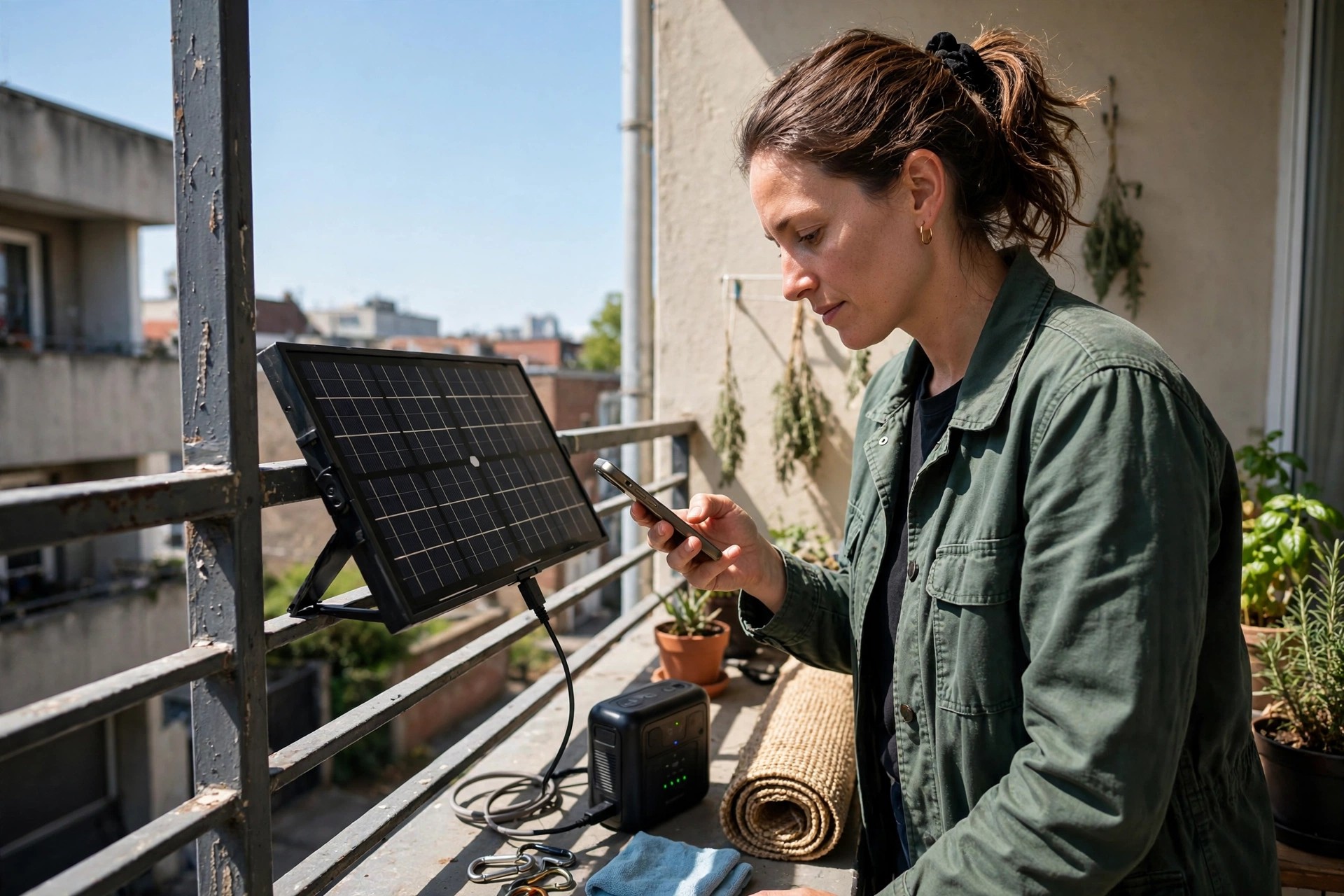
- Measure your balcony sun: south-facing (in the Northern Hemisphere) with minimal shade performs best. East- or west-facing can still work with lower output.
- Confirm your state's plug-in solar rules and wattage limit.
- Confirm your utility's rules and whether you need to notify them.
- Get landlord / HOA permission in writing if you rent or live in a shared building.
- Buy only UL 3700-listed equipment rated for your state's limit.
- Check that your balcony railing or mount can safely hold the panels in wind.
- To compare balcony kits with a full rooftop system for your home, get a solar quote.
Bottom line: Balcony solar panels are small, portable, plug-in kits that let renters and apartment dwellers generate some of their own electricity for the first time. They will not replace rooftop solar, but for people who have had no solar option, trimming the always-on baseline by $13 to $50 a month is a real start — if your state, utility, and building allow it.
This is general information, not legal or electrical advice. Verify your state's current plug-in solar law, your utility's rules, and your building's requirements before you buy or plug in.
Sources: EnergySage — Plug-In & Balcony Solar Panels; NAZ Solar Electric — Balcony Solar: How It Works & Where It's Legal; National Geographic, October 7, 2026 — Solar Panels That Plug Into Your Wall Are About to Be Everywhere.