Spire - Residential Rebates
- Read more about Spire - Residential Rebates
- Log in or register to post comments
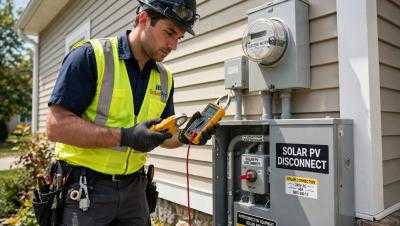
Carteret County passed an ordinance to specify the permitting process and establish siting requirements for wind energy systems. There are different rules and a different permitting process depending on the size and location of a system. Small systems up to 25 kilowatts (kW) are considered to be an accessory use and do not require the approval of a Wind Energy Permit Application. Small systems attached to a house can have a maximum height of 60 feet and are not subject to minimum setbacks. Small systems not attached to a house can have a maximum height of 75 feet, but must
The Public Service Board (PSB), now the Public Utilities Commission of Vermont, developed rules regarding utility line extension requests. While the majority of the regulations focus on the procedure followed (and associated fees) for the actual line extensions, the PSB also included a provision that requires electric utilities to provide written information to customers upon request about off-grid electricity generators as an alternative to line extensions. The PSB recognized that in many cases, off-grid electricity generators are less expensive than extending the electricity distribution lines, and therefore customers should be made aware of this option.
Alabama Gas Corporation (Alagasco) offers a rebate to its residential customers who replace older gas water heaters with new, efficient gas water heaters. Rebates are offered for customers who switch from electric to natural gas furnaces, AC and water heaters. All equipment requirements must be met in order to receive rebates. Separate incentives are also available for converting the fuel source of this equipment. Please visit program web site to access rebate forms and application instructions. Only current Alagasco customers with a gas account are eligible for rebate.
Columbia Gas of Ohio (CGO) offers energy efficiency rebates for furnaces, boilers, and water heaters that enroll in the Home Performance Solutions Program.
The Home Performance Solutions Program requires that a representative of Conservation Services Group inspect and test the home before informing the residents of recommended measures and possible incentives. The resident may contact a qualifying contractor to install the equipment; approved contractors are listed on the program web site.
For Income Eligible Customers, CGO also offers home weatherization measures, safety checks of natural gas appliances, energy inspections, natural gas furnace repair or replacement, and natural gas water heater
Duquesne Light provides rebates to its residential customers for purchasing and installing energy-saving equipment. Customers must purchase and install equipment before applying for the rebate. Customers must then fully and accurately complete the rebate form and send it to the address stated on the document. Rebates should be received within 60 days of rebate form submittal. Equipment standards must meet efficiency requirements of the program. Call 877-694-2197 for rebate inquiries.
Legislation enacted in 2009 directed the Maine Public Utilities Commission (PUC) to develop a program offering green power as an option to residential and small commercial customers in the state. The PUC issued rules in October 2010 and issued an RFP. The PUC selected a company, 3 Degrees Group, Inc., to manage the statewide green power program for Maine, which launched in April 2012.
The program purchases renewable energy certificates from qualified Maine renewable resources on behalf of Green Power customers. The program seeks to obtain 25% of its power from Maine Class I renewable energy projects that have been
Note: In 2010, the Federal Housing Finance Agency (FHFA), which has authority over mortgage underwriters Fannie Mae and Freddie Mac, directed these enterprises against purchasing mortgages of homes with a PACE lien due to its senior status above a mortgage. Most residential PACE activity subsided following this directive; however, some residential PACE programs are now operating with loan loss reserve funds, appropriate disclosures, or other protections meant to address FHFA's concerns. Commercial PACE programs were not directly affected by FHFA’s actions, as Fannie Mae and Freddie Mac do not underwrite commercial mortgages. Visit PACENation for more information about PACE financing